
.png)
We make decisions all the time...most, good and bad, pass without further thought.
The only point in ‘with the benefit of hindsight’ analysis is to learn....and this story is a potential LEARN.
No names, and these events are now a few months ago, for obvious reasons.
My involvement in the story started with an introduction from one of our bank partners who thought Axcelera could help a client of theirs.
A meeting was arranged with the co-founders of a fast-growing business. Their story was impressive. Revenue had grown from £1m to £15m in four years, but profits were actually lower at £15m, than at £1m. Oh...and booked revenue for the next 12 months was already £25m!
Fair to say, though, they had hit some scaling pain points:
-
Cashflow was already tight, and the assumptions behind how that growth would be funded weren’t clear.
-
Project profitability had deteriorated sharply. On £15m of turnover, the business was making around £50,000. In the previous six months, they’d also overspent on a head office refurbishment.
-
An audit was approaching, following issues the year before with finalising accounts.
-
A “finance team” of two — one financial controller and one of the founders, who was spending half their time in finance, no longer focused on operations and delivery, their original area of expertise.
Everyone was busy, but no one was really in control.
.png?width=914&height=405&name=Axcelera%20social%20media%20elements%20(1).png)
It was a fragile position for a business growing at that pace.
When we met the founders, there was instant chemistry. Their story resonated with ours at Axcelera — ambitious founders pushing through the chaos that often comes with growth.
They had spoken with other providers and told us they wanted to work with us.
We agreed on the next steps: a meeting with one of our experienced CFOs to design a plan to manage cashflow, bring in proper project reporting, and get them audit- and investor-ready.
Where things started to drift
Looking back, what stands out most is not a single decision, but how quickly momentum can fade when pressure is high, and priorities are pulled in different directions.
At the time, the founders were clearly under significant stress. They spoke openly about their challenges, and we had constructive conversations. But as often happens in fast-moving businesses, urgency elsewhere took over.
One of the underlying concerns was cost, not unreasonable given everything else they were juggling. In hindsight, there may have been ways to phase things differently or slow the engagement down. But those conversations never quite landed in a way that allowed progress to continue.
What happened next
Momentum faded. Calls went unanswered. Emails went quiet.
When we eventually reached one of the founders, they said:
“We liked you and your offer, but we’ve decided to go with a NED we know.”
Now, NEDs absolutely have their place — we work alongside some brilliant ones. But this wasn’t a NED situation. They needed hands-on financial leadership, not part-time governance input.
We reached out several times afterwards — gently reminding them that a NED wouldn’t fix a broken finance function and offering again to step in before the audit or investor discussions.
We even offered to provide a CFO to support them in investor negotiations, to help shape the funding narrative and ensure they didn’t give away too much equity or take on the wrong deal.
They declined this offer, and unsurprisingly, the investor conversations didn’t go too well. Despite the investor being ‘friendly’, they were not willing to risk their funds when the fundamentals still hadn’t been addressed, and the finances weren’t painting the right picture.
A few weeks later came the final message:
“Sorry — it’s too late. We’ve decided to put the business into administration.”
Reflections
We don’t believe any single person or decision caused this outcome. We look at our part in these people’s story and wonder whether we could have done things differently. But ultimately the decisions weren’t ours to make.
Part of why Axcelera exists is to help founders avoid reaching this point. A point where years of effort and ambition are put at risk because the finance function has not kept pace with the complexity of the business.
Sometimes it’s not about needing more growth, but about having the right support at the right moment.
And sometimes, timing matters more than intent.
This one will stay with us.
FAQs
Q: What does a Fractional CFO do?
A Fractional CFO brings commercial insight without the full-time cost. They step in to guide strategy, build forecasts, and support fundraising, so founders can focus on growth.
Q: How much does a Fractional CFO cost in the UK?
A full-time CFO in London can cost over £150,000 per year. A Fractional CFO service is typically 40–60% less, with flexible day rates that start from a few hundred pounds, depending on the level of support you need.
Q: What is the difference between a CFO and a Financial Controller?
A CFO focuses on strategy, growth, and investor relations. A Financial Controller ensures reporting and processes are accurate, so the CFO has the right data to make decisions.
Q: Why do businesses choose Fractional CFO services instead of hiring full-time?
Every ambitious business will eventually need a CFO, but not all the time. A Fractional CFO gives you flexibility, cost efficiency, and senior expertise exactly when you need it—without paying for capacity you don’t.
Q: How do I know if my startup needs one?
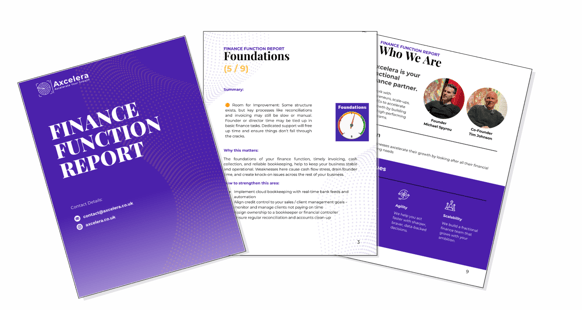
If you are preparing for fundraising, expanding internationally, or struggling to get visibility on cash flow, a Fractional CFO is often the right choice. Take our free two-minute Fractional Finance Assessment to see whether your business needs a CFO, Controller, or Bookkeeper right now.
Let's work together...
A fractional CFO is not just a financial manager. They are a strategic partner who helps you unlock funding, build better forecasts, and achieve financial clarity.
For London-based tech founders aiming for sustainable scale, this is the smartest move to grow stronger, faster, and with confidence.
If you're curious about what a part-time flexible CFO in London or full-stack finance team of experts could bring to your business, don't wait any longer, do our assessment or book a meeting with us to explore your options.
.png?width=2000&height=500&name=Axcelera%20Website%20artworks%20(7).png)